

Corporate events have a structural problem: they bring together people who did not choose to be there, many of whom barely know each other, and expect something like a good atmosphere to appear.
The open bar tries. The covers band tries. And yet the usual scene is the same: each department at its own table, talking about work.
The problem it really solves
A magician is not there to “liven things up”. They are there to solve three specific things:
Breaking up closed groups. Close-up magic makes people from different tables gather around something. When something impossible happens, the first thing people do is turn to look at whoever is next to them. It does not matter that they are from another department.
Giving people something to talk about other than work. For the rest of the night people keep talking about what they saw. It is the only moment of the event that creates its own conversation.
Creating a memory with a date on it. Nobody remembers the company dinner from three years ago. They do remember what happened in their own hands that night.
The three moments that work
During the reception. The most awkward moment of any corporate event: people standing, holding a glass, not knowing who to talk to. Close-up magic solves it without anyone having to organise anything.
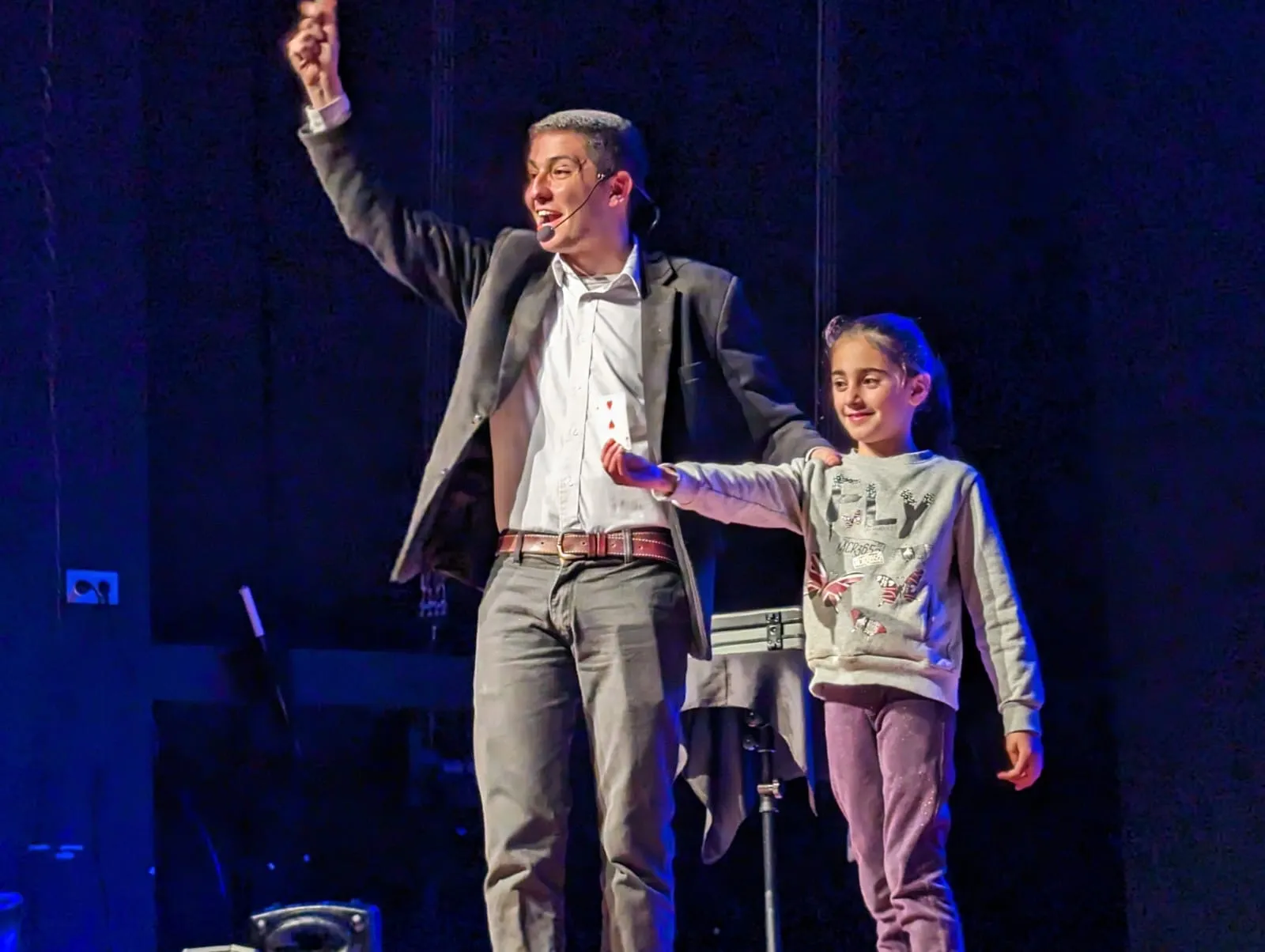
After dinner. Energy plummets when the plates are cleared. A thirty or forty minute stage show lifts the room just before the music.
To close a working day. After eight hours of presentations, a show marks the shift from the formal part to the informal part better than any announcement.
Building in the brand without embarrassment
This is where most activations fail, because the bolt-on is obvious.
What does not work: putting the logo on a screen behind the magician. People ignore it.
What does work is making the brand part of how the effect works. Some real examples of how it can be approached:
- One of the company’s products appears as the impossible object of the final effect
- The slogan or the campaign name is the word someone in the audience “chooses freely”
- The values of a new internal strategy turn out to have been predicted in an envelope sealed since the start of the night
- The name of the person retiring appears where it should not be
The difference is that in these cases the message lands at the moment of maximum attention, when people are trying to work out what just happened. That is remembered. A logo on a screen is not.
This is built from scratch for each event, so it needs a conversation beforehand and some time. It is not something to improvise the week before.
What to ask before booking
Have they worked at corporate events? It is not the same as a wedding. There are hierarchies in the room, there are people who cannot be put on the spot and there is a message the company wants to get across.
What do they need from the space? Ask for it in writing and in advance: sound, lighting, a stage, setup time. Finding out on the day is the classic avoidable disaster.
Can they adapt if the event runs late? Corporate events always run late. The director’s speech goes on, dinner comes out late. A professional trims or reorders without anyone noticing.
What about photos and videos? Decide beforehand whether the company wants material for social media and who will film it.
An invoice? Obvious, but worth confirming beforehand and not the following week when accounts asks for it.
A note on numbers
The question I am asked most is whether this works with two hundred people. The answer is yes, but the format changes.
Up to about eighty people, close-up magic covers the whole room during a drinks reception. Above that you have to decide: either there is a main show for everyone, or you accept that close-up magic will reach part of the audience and plan accordingly.
What does not work is trying to do close-up magic for two hundred and leaving half of them watching from a distance without seeing anything.
Organising a corporate event? Tell me how many of you there will be, where, and at what point in the schedule you have it in mind, and I will send you a proposal.